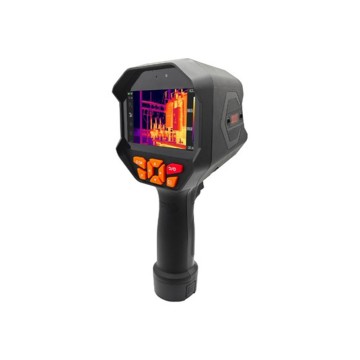
SHENZHEN, GUANGDONG, CHINA, September 23, 2026 /EINPresswire.com/ — Handheld thermal cameras are increasingly used for temperature inspection, equipment diagnostics, building inspection, manufacturing applications, and other scenarios where conventional visible-light imaging cannot provide sufficient information. As different applications require different combinations of thermal resolution, temperature measurement range, portability, and additional functions, buyers need to evaluate several technical factors before selecting a suitable device. Dianyang provides a range of handheld thermal imaging cameras and highlights key considerations for buyers evaluating thermal imaging equipment.
Understanding the Role of a Handheld Thermal Camera
A handheld thermal camera captures infrared radiation emitted by objects and converts thermal information into an image that can be viewed and analyzed. Unlike conventional cameras that primarily record visible light, thermal imaging equipment provides information about temperature distribution across a target.
For professional users, this capability can support inspection and diagnostic processes where identifying temperature differences is important. Dianyang lists applications across power utilities, manufacturing, automobile diagnostics, solar power, building inspection, security, UAV drones, and other fields. Its products are distributed across Asia, Europe, North America, and other regions.
For buyers, the first step is therefore to define the intended application. A thermal camera used for industrial equipment inspection may require different specifications from one intended for building inspection or general maintenance.
Thermal Resolution Is an Important Selection Factor
Thermal resolution is one of the first specifications buyers should compare. It determines how many infrared pixels are used to represent the thermal image and can affect the level of thermal detail available to the operator.
Dianyang’s handheld thermal camera portfolio includes several resolution configurations. The DP-64D Pro Series provides a 640 × 512 infrared resolution, while the DP-25DV and DP-25DR models provide 256 × 192 resolution. The DP-38D and DP-38 models use 384 × 288 infrared resolution.
These different configurations allow buyers to consider the relationship between required thermal detail and the application itself. When inspecting relatively small temperature differences or examining targets from greater distances, a higher-resolution configuration may provide more thermal information. For more general inspection tasks, a different resolution level may be sufficient.
Temperature Measurement Range Should Match the Application
Temperature measurement capability is another important consideration. Different inspection environments can expose a thermal camera to different temperature conditions, so buyers should review the stated measurement range before selecting a model.
Dianyang’s product listings show different capabilities among its handheld cameras. For example, the DP-09D Thermal Camera has a listed temperature measurement range of -20°C to 550°C. Other models provide different functions and configurations, including automatic high- and low-temperature tracking.
Rather than selecting a camera based solely on its maximum temperature value, buyers can compare the expected temperature range of their actual inspection targets with the manufacturer’s specifications.
Consider Additional Measurement Functions
A handheld thermal camera can provide more than a thermal image. Additional measurement functions can influence how efficiently technicians collect and interpret inspection data.
The DP-25DR Thermal Imaging Camera, for example, supports laser point measurement and a 40-meter laser range according to Dianyang’s product information. The DP-12D supports automatic high- and low-temperature tracking, while the DP-11 combines infrared and visible-light imaging and supports 3D thermal analysis.
These functions can be relevant when users need to locate specific temperature points, identify temperature extremes, or compare thermal information with visible-light imagery. Buyers should therefore review the measurement and analysis functions together with basic infrared resolution.
Display and On-Site Operation Also Matter
Portability is one of the main characteristics of a handheld thermal camera, but the device also needs to provide an interface suitable for field inspection.
Dianyang’s DP-38D Professional Thermal Camera features a 4.3-inch full-color IPS touchscreen and a 384 × 288 infrared resolution. The DP-38 model also uses a 4.3-inch LCD capacitive touchscreen and combines infrared resolution with a visible-light camera.
For technicians working directly at inspection sites, display size and interface design can affect how easily thermal images and measurement information can be viewed. Depending on the application, functions such as thermal video recording may also be relevant. Dianyang’s DP-25DV model supports on-site thermal video recording.
Visible-Light and Thermal Imaging Can Work Together
Thermal information can sometimes be easier to interpret when combined with a conventional visible-light image. Visible-light imaging provides information about the physical appearance and location of an object, while thermal imaging highlights temperature distribution.
Dianyang’s handheld camera range includes models equipped with infrared and visible-light imaging functions. The DP-11, for example, is described as being equipped with both infrared and visible light, while the DP-38 combines a 384 × 288 infrared resolution with a 5-megapixel visible-light camera.
For inspection personnel, combining these two image types can help connect a thermal anomaly with its physical location on the inspected equipment.
Dianyang’s Experience in Thermal Imaging
Shenzhen Dianyang Technology Co., Ltd. was founded in 2013 and specializes in the research, development, and manufacturing of infrared thermal imaging solutions. The company describes itself as a National High-Tech Enterprise with more than a decade of industry experience.
Its product portfolio extends beyond handheld thermal cameras to stationary PCBA thermal imaging cameras, smartphone thermal imaging cameras, non-destructive testing equipment, thermal night vision devices, thermal riflescopes, weapon sights, thermal imaging cores and modules, and related accessories.
The company operates under the manufacturing infrastructure of its parent company, VHD Group. The production base in Dongguan includes SMT lines, CNC machining centers, injection molding systems, and dust-free workshops. Dianyang states that its products undergo testing and have achieved international certifications including CE, FCC, and RoHS.
Application Experience Is Another Buyer Consideration
A thermal camera’s suitability depends not only on specifications but also on the environment in which it will be used. Dianyang identifies customers and applications in power utilities, manufacturing, automobile diagnostics, solar power, building inspection, security, UAV drones, and defense sectors. The company also states that its products have more than 5,000 applications in areas including electric utilities, manufacturing, metallurgy, petrochemical, and research and development.
This application range illustrates why thermal camera selection needs to begin with the inspection task. Buyers can first define the target, expected temperature conditions, inspection distance, required thermal detail, and desired measurement functions before comparing specific models.
A Practical Approach to Handheld Thermal Camera Selection
For buyers evaluating a handheld thermal camera, several specifications can form a practical checklist. Thermal resolution, temperature measurement range, visible-light capability, display configuration, laser measurement functions, recording capabilities, and portability can all be considered according to the intended application.
Dianyang’s product range demonstrates different combinations of these features, from the 640 × 512 DP-64D Pro Series to compact models such as the DP-09D and DP-11, as well as professional configurations such as the DP-38D.
By comparing technical requirements with actual inspection conditions, buyers can narrow the available options and select a thermal imaging configuration that corresponds with their operational needs. For organizations using thermal imaging across multiple applications, a supplier with a broader product portfolio may also provide different configurations for different inspection scenarios.
As infrared imaging continues to support industrial inspection, maintenance, diagnostics, and other applications, a structured approach to product selection can help buyers focus on the specifications that matter most for their particular use case. Dianyang’s handheld thermal camera portfolio provides multiple resolution and functional configurations for users evaluating infrared imaging solutions across different professional environments.
Official Website: https://www.dyt-ir.com/
Shenzhen Dianyang Technology Company
Shenzhen Dianyang Technology Company
+ +86 75528505260
bill.chen@dianytech.com
Legal Disclaimer:
EIN Presswire provides this news content “as is” without warranty of any kind. We do not accept any responsibility or liability
for the accuracy, content, images, videos, licenses, completeness, legality, or reliability of the information contained in this
article. If you have any complaints or copyright issues related to this article, kindly contact the author above.

Media gallery