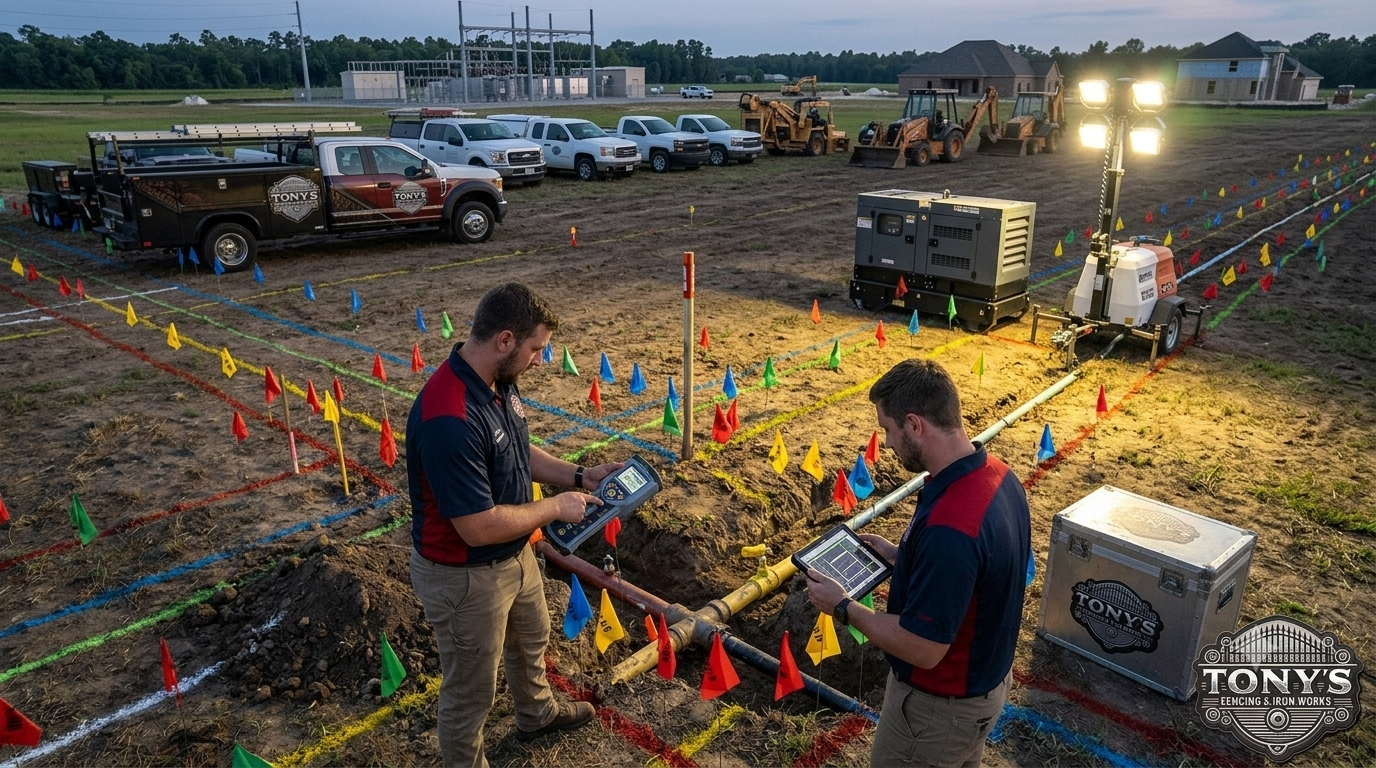
Tony’s Fencing & Iron Works outlines utility locating, private-line concerns, servitudes and preparation steps for Louisiana fence projects.
COVINGTON, LA, UNITED STATES, July 27, 2026 /EINPresswire.com/ — Tony’s Fencing & Iron Works has released new educational information for Southeast Louisiana property owners about identifying underground utilities, private service lines, drainage systems and property restrictions before fence and gate installation begins.
The information addresses a part of fence planning that may receive less attention than material selection, privacy, appearance or gate design. Although a completed fence is visible above ground, its stability depends on posts and footings installed below the surface. Each post hole creates the potential to encounter buried electrical, water, communication, drainage, septic, irrigation or gas infrastructure.
The topic is especially relevant during Louisiana’s active home-improvement season, when homeowners, contractors, pool builders, landscapers and utility crews may be working on the same property within a short period.
Louisiana 811 instructs excavators to submit a locate request at least two full business days before planned excavation. The waiting period gives participating utility operators time to respond and identify the approximate locations of underground facilities they own. Weekends and designated holidays are not included in the two-business-day calculation.
“Utility markings are one part of fence planning, but private lines, drainage and property restrictions also deserve careful review,” said Tony Ostrowski of Tony’s Fencing & Iron Works. “Taking time to understand the site before post locations are finalized can help the entire project move forward more thoughtfully.”
Public Utility Markings Do Not Identify Every Buried Line
A common source of confusion is the difference between public utility infrastructure and privately owned underground systems.
Louisiana 811 serves as a notification center. After a locate request is filed, member utility companies receive information about the proposed excavation area. Those companies are generally responsible for marking the underground facilities they own and operate.
However, utility-company ownership may end at a meter, transformer, service point or other connection. Lines installed and maintained by the property owner may not be included in the public locating process.
Examples of private systems that may require separate investigation include:
Irrigation pipes and sprinkler-control wiring
Electrical service running to detached garages, sheds or workshops
Landscape-lighting cables
Pool pumps, lights and equipment connections
Water piping located beyond the utility meter
Septic tanks, treatment components and field lines
French drains, catch-basin connections and buried drainage pipes
Automatic gate power, communication and control wiring
Propane lines serving outdoor equipment
Low-voltage pet-containment or security systems
Property records, construction photographs, invoices and information from previous owners can provide useful clues. Visible features may also indicate where privately owned systems enter the ground. These features can include irrigation valve boxes, electrical conduit, exterior outlets, cleanouts, pool equipment, septic covers, water meters and drainage inlets.
When the route of a private system remains uncertain, a private utility locator or an appropriately licensed trade professional may be needed.
Markings Indicate Approximate Locations
Utility paint and flags are important planning tools, but they do not represent the exact outside edge of every underground facility.
Louisiana 811 materials describe a tolerance zone surrounding a marked utility. Excavation within that zone requires additional precautions because the buried line may not be directly beneath the center of the painted mark or flag.
This distinction matters during fence construction because gate posts, corner posts and terminal posts may need larger or deeper footings than ordinary line posts. A proposed post that appears to be beside a utility marking may still fall within the area where careful excavation procedures are required.
Possible layout adjustments may include moving a post, redistributing panel spacing, changing a gate width or relocating an opening. The appropriate response depends on the type of utility, property conditions and applicable excavation requirements.
Utility markings should remain visible during active work. Paint may fade, and flags can be displaced by mowing, weather, pets or landscaping activity. Dated photographs can help document the markings before construction begins.
If a project is delayed, expanded or moved to another part of the property, the original locate request may no longer match the work area. Current instructions from Louisiana 811 should be reviewed before excavation resumes.
Color Codes Help Identify Utility Types
Utility locators use standardized colors to indicate the general type of underground facility present.
Red commonly indicates electric power lines, cables, conduit or lighting systems. Yellow is associated with gas, oil, steam or petroleum facilities. Orange identifies communication, alarm, signal, telephone or cable infrastructure. Blue indicates potable water. Green is used for sewer and drain lines, while purple may identify reclaimed water, irrigation or slurry systems.
White markings are generally used to identify the proposed excavation area. Pink is commonly used for temporary survey markings.
The colors help workers understand what type of system may be nearby. However, color alone does not determine whether excavation can proceed or what method should be used. The locate request, utility responses and applicable safe-digging requirements remain essential.
Servitudes and Easements Require Separate Review
Locating utilities does not establish a property boundary or determine whether a fence may be built in a proposed location.
A survey may show utility servitudes, drainage servitudes, road rights-of-way, access areas and other recorded restrictions. These areas may allow a utility company, governmental entity, drainage authority or neighboring property owner to access part of the property for a defined purpose.
A fence placed within a servitude may interfere with inspection, maintenance, drainage or emergency repairs. In some circumstances, a fence section may need to remain removable, a gate may need to preserve access, or permanent construction may be restricted.
Requirements may differ among unincorporated St. Tammany Parish, Tangipahoa Parish and incorporated municipalities such as Covington, Mandeville, Madisonville, Slidell, Hammond and Ponchatoula.
Subdivision restrictions and homeowners association requirements may also be separate from parish or municipal rules. Approval from one entity does not necessarily satisfy every applicable requirement.
A current boundary survey is especially important when the legal property line is uncertain. An existing fence, hedge, mowing line or row of trees does not automatically establish the surveyed boundary.
Louisiana Drainage Conditions Affect Underground Planning
Southeast Louisiana properties often include swales, ditches, catch basins, French drains, downspout extensions and other systems designed to move stormwater.
These features can affect both the construction process and the long-term performance of a fence. Soil near drainage paths may remain wet, erode after storms or shift over time. Tony’s Fencing & Iron Works has previously explained that repeated saturation and soil movement can reduce post stability along Louisiana fence lines.
A buried drainage pipe can also be damaged during post excavation even when it is not part of a public utility network. Before determining the final layout, the property should be reviewed for low areas, visible drain outlets, catch basins, standing water, erosion and other signs of underground drainage.
Fence construction should not unintentionally block a swale or redirect runoff toward a home, pool, neighboring property or gate opening.
Automatic Gates Add More Underground Components
Automatic driveway gates may require electrical service, control wiring, safety devices, communication cables, keypad connections or vehicle-detection equipment.
Planning therefore extends beyond the gate posts themselves. The selected location must account for underground utilities, drainage, vehicle movement, emergency access and the space required for the gate to swing or slide.
Gate posts may also require substantial footings because they support the weight and movement of the gate. Underground conflicts should be addressed before the post locations and electrical routes are finalized.
Coordination may be needed among the fence contractor, electrician, gate-operator installer, utility locator, driveway contractor and property owner.
Homeowner Preparation Checklist
Property owners can complete several practical preparation steps before construction. These activities do not replace professional utility locating, surveying, permitting or trade-specific inspections.
Review available property documents
Locate the most recent survey, subdivision plat, title documents and available construction plans. These records may show boundaries, servitudes, utility corridors and drainage features.
Walk the proposed fence line
Inspect the entire route rather than only the corners. Look for meters, conduit, cleanouts, valve boxes, drain covers, irrigation controls, pool equipment and changes in soil or vegetation.
Identify privately installed systems
Consider improvements added after the home was built, including landscape lighting, irrigation, outdoor kitchens, pools, detached buildings, generators and automatic gates.
Mark the proposed work area
Temporary white paint or white flags can help identify the intended excavation area when submitting a locate request. Utility-identification colors should not be used for this purpose.
Photograph the yard
Take clear photographs of the proposed fence line, utility markings, drainage features and nearby structures. Images can help contractors understand the site and document conditions before work begins.
Test gate locations
Temporary stakes can help evaluate driveway clearance, lawn-equipment access, trash-container movement, pedestrian routes and the gate’s proposed swing direction.
Keep markings visible
Avoid removing utility flags or covering paint markings before excavation is complete. Landscaping and mowing may need to be postponed in the marked area.
Communicate recent changes
Inform the fence contractor about newly installed irrigation, electrical, drainage, pool or septic work, particularly when those improvements may not appear on older property records.
Frequently Asked Questions
-Does Louisiana 811 mark every underground line?
No. Participating utility operators generally mark the facilities they own. Privately owned irrigation, septic, pool, drainage, lighting and electrical systems may require a separate private locate or assistance from a qualified professional.
-How early should a locate request be submitted?
Louisiana 811 states that notification should be made at least two full business days before excavation. Weekends and holidays do not count toward that period.
-Is an 811 request needed for hand digging?
The method used to remove soil does not eliminate the possibility of damaging a shallow utility. Current Louisiana 811 requirements should be followed before planned excavation.
-Does an old fence prove where the property line is?
No. Existing fences may have been installed inside, outside or across the legal boundary. A current survey provides more reliable boundary information.
-Can a fence cross a utility servitude?
The answer depends on the recorded servitude, local requirements and the entity that holds access rights. Some locations may require approval, access gates or removable sections. Others may restrict permanent construction.
-Will public utility markings identify a septic system?
Privately owned septic tanks, piping and disposal fields are generally not treated as public utility facilities. Septic records or a qualified septic professional may be needed.
-What should happen when a proposed post conflicts with a utility marking?
Excavation should pause while the layout and applicable requirements are reviewed. Possible changes include moving the post, adjusting fence spacing or relocating a gate.
-Are automatic gates included in utility planning?
Yes. Automatic gates may involve power, controls, communication lines, safety equipment and detection devices in addition to larger structural posts.
-Can utility flags be removed after they appear?
Flags and markings should remain in place while excavation is active. Removing them too early can make it difficult to identify the marked facilities.
-Why should drainage be reviewed before fence installation?
Drainage systems may be buried, and surface-water routes can affect post stability. A fence should avoid damaging drainage pipes or obstructing the intended movement of stormwater.
Local Educational Resource Available
Tony’s Fencing & Iron Works has published a related educational article covering underground utilities before fence installation, private lines, utility-marking colors, servitudes, gate planning and homeowner preparation steps:
https://tonysfencingandiron.com/underground-utilities-before-fence-installation-louisiana/
The information is intended for property owners in Covington, Mandeville, Madisonville, Slidell, Abita Springs, Folsom, Ponchatoula, Hammond, St. Tammany Parish, Tangipahoa Parish and nearby Southeast Louisiana communities.
About Tony’s Fencing & Iron Works
Tony’s Fencing & Iron Works is a Southeast Louisiana fencing company serving residential, commercial and rural properties. Services include wood fencing, ornamental ironwork, chain-link fencing, pool fencing, custom gates, automatic gate systems and fence repair.
The company serves communities across the Northshore and surrounding areas, including Covington, Mandeville, Madisonville, Slidell, Ponchatoula and Hammond.
Educational information is not a substitute for a utility locate, professional survey, permit review, legal advice or instructions from utility operators and local authorities.
Media Contact
Tony Ostrowski
Tony’s Fencing & Iron Works
Phone: 985-703-0595
Website: https://tonysfencingandiron.com/
Gwen M.
Designs For You
email us here
Visit us on social media:
Facebook
Legal Disclaimer:
EIN Presswire provides this news content “as is” without warranty of any kind. We do not accept any responsibility or liability
for the accuracy, content, images, videos, licenses, completeness, legality, or reliability of the information contained in this
article. If you have any complaints or copyright issues related to this article, kindly contact the author above.

Media gallery