More than 180 healthcare leaders, policymakers, community organizations, advocates, clinicians, and individuals with lived experience from across the Commonwealth convened May 19–20 for the inaugural Pennsylvania Maternal Health Symposium, a first-of-its-kind statewide gathering focused on advancing maternal health innovation, collaboration, and quality improvement in Pennsylvania.
This press release features multimedia. View the full release here: https://www.businesswire.com/news/home/20260520115395/en/
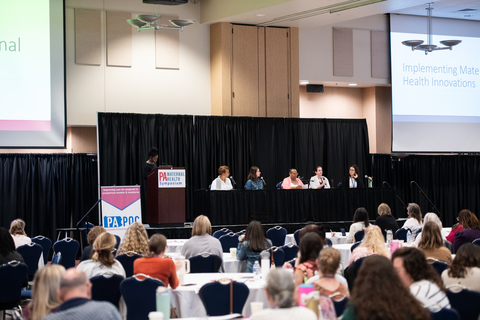
A panel of maternal health innovators share lessons learned from their grant programs.
Hosted by the Pennsylvania Perinatal Quality Collaborative (PA PQC), the Pennsylvania Perinatal Action Collaborative (PAC), the Jewish Healthcare Foundation, and recipients of state maternal health innovation funding, the multi-day symposium created a forum for cross-sector learning and strategic alignment around Pennsylvania’s Maternal Health Strategic Plan and the PA PQC’s upcoming Alliance for Innovation on Maternal Health Patient Safety Bundle initiative focused on postpartum discharge transition.
Held at the Blair County Convention Center in Altoona, the symposium featured keynote presentations, regional breakout sessions, poster presentations, peer-to-peer learning, networking opportunities, and discussions grounded in the lived experiences of mothers and families across Pennsylvania.
“This symposium represents a major milestone for maternal health collaboration in Pennsylvania,” said Robert Ferguson, MPH, chief policy officer of the Jewish Healthcare Foundation. “The challenges facing mothers and babies are too complex for any one organization or sector to solve alone. By bringing together healthcare systems, community organizations, public health leaders, policymakers, and families with lived experience, Pennsylvania is building a coordinated movement for safer, more equitable maternal care.”
The symposium expanded upon the PA PQC’s annual designation awards event by integrating statewide maternal health strategy development, implementation learning, and regional collaboration alongside recognition of hospitals and organizations advancing quality improvement efforts.
The event opened with a presentation by Dr. Fan Lee on health-related social needs screening and response in perinatal care, followed by workshops and discussions focused on practical implementation strategies to better support pregnant and postpartum individuals.
“The Shapiro Administration has prioritized improving maternal health in Pennsylvania by working across state agencies to reduce maternal mortality and morbidity,” said Pennsylvania Department of Health Executive Deputy Secretary Kristen Rodack. “To ensure Pennsylvania is the safest place to give birth in the nation, we must continue to foster the robust collaborations and innovative partnerships being showcased at this symposium. Collaborative efforts like this are helping women in Pennsylvania connect to the services and care they need, but there is still much more to be done. At the Department of Health, we are excited to work with our partners to implement the recently released Maternal Health Strategic Action Plan to continue to improve maternal health outcomes across the Commonwealth.”
On May 20, state and regional leaders highlighted ongoing partnerships and maternal health initiatives across Pennsylvania, including a keynote from the 4th Trimester Project based in North Carolina and presentations from the Pennsylvania Department of Health, PAC, PA PQC, regional maternal health coalitions, and maternal and child health grant recipients. The symposium also featured a panel discussion on implementing maternal health innovations with experts representing healthcare systems, public health, behavioral health, and community-based organizations.
“Improving maternal health requires close collaboration and partnership across systems – no one provider can do this alone, but when we work together, we can make necessary change that can give moms and their children a vibrant future,” said Pennsylvania Department of Human Services Secretary Dr. Val Arkoosh. “The Shapiro Administration is committed helping build that vibrant future for Pennsylvania families, and we are grateful for the providers and partners who are driving this work in their communities and making change possible.”
A central focus of the symposium was ensuring maternal health work remains informed by the voices and experiences of families. During the session “Understanding the Fourth Trimester Through Lived Experience,” mothers and advocates shared personal stories and recommendations for improving postpartum care, communication, support systems, and healthcare navigation.
“Listening to and learning from mothers must remain at the center of our maternal health efforts,” said Carolyn Byrnes, MPH, policy director at the Jewish Healthcare Foundation and manager of the Pennsylvania Perinatal Action Collaborative. “The lived experience perspectives shared during this symposium reinforced the importance of designing systems that truly support families throughout pregnancy, birth, and the postpartum period.”
Participants also engaged in regional breakout discussions and Maternal Health Strategic Action Plan “knowledge cafés,” which gathered stakeholder feedback and recommendations on key priorities including rural access to care, health-related social needs, behavioral health and substance use disorder services, healthcare workforce expansion, and improving access to high-quality maternal healthcare statewide.
As part of the symposium, the PA PQC also recognized hospitals and healthcare teams across Pennsylvania through its annual Perinatal Quality Improvement Designation Awards. The designation program recognizes hospitals that achieved quality improvement milestones over a 12-month period, in this case April 2025 through March 2026, while advancing maternal and neonatal health initiatives, including projects focused on health equity and patient voice.
A total of 55 hospitals were recognized at the ceremony:
ACMH Hospital
AHN – Forbes Hospital
AHN – Jefferson Hospital
AHN – St. Vincent Hospital
AHN – West Penn Hospital
Geisinger – Bloomsburg Hospital
Geisinger – Community Medical Center
Geisinger – Lewistown Hospital
Geisinger – Medical Center, Danville
Geisinger – Wyoming Valley Medical Center
Guthrie – Robert Packer Hospital Birthing Center
Independence Health System – Westmoreland Hospital
Indiana Regional Medical Center
Jefferson Health – Abington Hospital
Jefferson Einstein Medical Center – Montgomery
Jefferson Einstein Medical Center – Philadelphia
Jefferson Health – Thomas Jefferson University Hospital
Lehigh Valley Health Network – Cedar Crest Hospital
Lehigh Valley Health Network – Muhlenberg Hospital
Lehigh Valley Health Network – Pocono
Lehigh Valley Health Network – Schuylkill
Main Line Health – Bryn Mawr Hospital
Main Line Health – Lankenau Medical Center
Main Line Health – Paoli Hospital
Main Line Health – Riddle Hospital
Mount Nittany Medical Center
Penn Highlands DuBois
Penn Medicine – Chester County Hospital
Penn Medicine – Doylestown Hospital
Penn Medicine – Hospital of the University of Pennsylvania
Penn Medicine – Lancaster General/Women and Babies
Penn Medicine – Pennsylvania Hospital
Penn State Health – Milton S. Hershey Medical Center and Children’s Hospital
Penn State Health – St. Joseph’s
Penn State Health – Hampden Medical Center
Punxsutawney Area Hospital
St. Clair Hospital
Tower Health – Phoenixville Hospital
Tower Health – Reading Hospital
Trinity Health – St. Mary Medical Center
UPMC – Altoona
UPMC – Hamot
UPMC – Hanover
UPMC – Horizon
UPMC – Magee Womens Hospital
UPMC – Northwest
UPMC – Wellsboro & UPMC – Williamsport
Warren General Hospital
Wayne Memorial Hospital
WellSpan – Evangelical Community Hospital
WellSpan – Ephrata Community Hospital
WellSpan – Gettysburg Hospital
WellSpan – Good Samaritan Hospital
WellSpan – Summit Health Chambersburg Hospital
WellSpan – York Hospital
Hospitals and healthcare teams recognized during the symposium included organizations participating in initiatives addressing maternal sepsis, neonatal abstinence syndrome, maternal opioid use disorder, safe sleep, and postpartum care transitions. The designation awards continue to highlight Pennsylvania hospitals’ commitment to improving maternal and infant outcomes through data-driven quality improvement and collaborative learning.
Pennsylvania continues to face persistent maternal and infant health challenges, including racial and ethnic disparities in outcomes, maternal morbidity, behavioral health needs, and rising concerns surrounding postpartum support and access to care. Through collaborative statewide efforts, the PA PQC, PAC, and partner organizations are working to improve outcomes for birthing individuals and infants across the Commonwealth.
Funding for the symposium and the ongoing work of the PA PQC and PAC comes from the Pennsylvania Department of Drug and Alcohol Programs, the Health Resources and Services Administration, the Pennsylvania Department of Health, and the Pennsylvania Department of Human Services.
About the Pennsylvania Perinatal Quality Collaborative
The Pennsylvania Perinatal Quality Collaborative (PA PQC) provides quality improvement support to healthcare teams to improve the standard of care for pregnant and postpartum people and babies. More than 75 birth sites and NICUs from across the Commonwealth participate in the PA PQC. The PA PQC is administered by the Jewish Healthcare Foundation and is affiliated with the Northeast Pennsylvania Perinatal Quality Collaborative (NEPaPQC). For more information, visit papqc.org.
About the Pennsylvania Perinatal Action Collaborative
The Pennsylvania Perinatal Action Collaborative (PAC) is a statewide coalition working to improve maternal health outcomes and birth equity through cross-sector collaboration, systems change, advocacy, and lived experience engagement. The PAC is administered by the Jewish Healthcare Foundation with funding from the Pennsylvania Department of Health.
About the Jewish Healthcare Foundation
The Jewish Healthcare Foundation (JHF) offers a unique brand of activist philanthropy to advance healthcare innovation, advocacy, collaboration, and education in the interest of better health. JHF is based in Pittsburgh and operates numerous statewide For more information, visit jhf.org.
View source version on businesswire.com: https://www.businesswire.com/news/home/20260520115395/en/
Media gallery