Entomologists Reveal 10 Metros at Heightened Risk for Pest-Borne Disease Transmission
PR Newswire
FAIRFAX, Va., May 13, 2026
The National Pest Management Association signals a concerning season ahead for disease-spreading pests across the U.S.
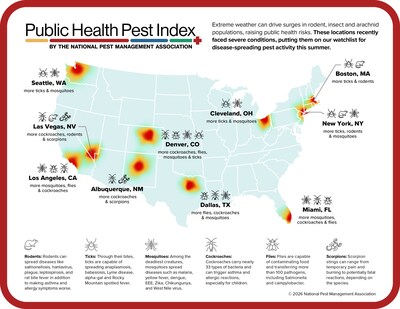
FAIRFAX, Va., May 13, 2026 /PRNewswire/ — Today, the National Pest Management Association (NPMA) released its Public Health Pest Index, a biannual forecast identifying U.S. metropolitan areas most at risk for disease-spreading pest surges through late spring and summer. This important report comes as emergency departments are reporting the highest weekly rates of tick bite visits since 2017 and mosquito-borne West Nile virus cases are on the rise.
“What we’re seeing right now should be a wake-up call,” said Dr. Jorge Parada, medical advisor for NPMA with a focus on infectious disease. “Increased pest pressure can directly fuel a rise in serious public health threats. We’re talking about Lyme disease from ticks, West Nile virus from mosquitoes and foodborne illnesses like salmonellosis spread by cockroaches and rodents. These risks are real, and the earlier we take preventive action, the better we can protect our health and communities.”
“Thanks to some erratic weather this year, we’re expecting an especially active season for pests,” explained Dr. Jim Fredericks, senior vice president of public affairs for NPMA. “That’s why awareness and early action matter so much. We created the Public Health Pest Index to help people understand the risks and take steps before pests become a bigger problem.”
The top U.S. cities* named to NPMA’s Public Health Pest Index include:
- Albuquerque: Record warmth and an exceptionally dry start to pest season can push cockroaches and scorpions closer to neighborhoods and homes where water is easy to find. Residents should eliminate standing moisture sources around their property to keep these pests out as summer heat builds.
- Boston: This winter’s historic snowfall thawed and resulted in a surge of moisture that fed dense vegetation, giving ticks more places to lurk and rodents more to forage. Residents across Greater Boston should brace for elevated activity from both pests, along with a heightened risk of Lyme disease and rodent-borne illness.
- Cleveland: Above-average rainfall and climbing temperatures create ideal breeding conditions for pests like ticks and mosquitoes that carry serious disease risks. Residents should take precautions early and often this season when spending time outdoors to protect themselves from these disease spreading pests.
- Dallas: A hot, rainy weather pattern will likely prime the Metroplex for a surge in flies and cockroaches. If severe storms and flooding continue, mosquitoes breeding in residual standing water are another concern, increasing the risk of pest-borne illnesses this summer.
- Denver: Consecutive record-warm months could fast-track Denver’s pest season, with cockroaches, flies, mosquitoes and ticks expected to thrive under the unseasonably warm, wet conditions.
- Las Vegas: An unusually scorching spring may send cockroaches, rodents and even scorpions scrambling indoors for water and cooler shelter. With a hot summer ahead, that heat can accelerate breeding, allowing populations to build rapidly.
- Los Angeles: A rain-soaked end to the winter season followed by record heat could allow mosquitoes, flies and cockroaches to multiply quickly. With temperatures staying high across Southern California, pest pressure is likely to keep rising into the summer months.
- Miami: Following a mild winter, early spring brought the warmth and rain that mosquitoes, cockroaches and flies thrive in. With South Florida’s humid climate continuing to support pest activity well into the season, residents should remove moisture sources around their property before populations build.
- New York: The rapid shift from blizzard conditions to a sudden increase in temperatures has left behind excess moisture that ticks, rodents and mosquitoes are quick to take advantage of. If wet and warm conditions continue, pest pressure could ramp up faster than usual.
- Seattle: Heavy rainfall will likely fuel the dense vegetation ticks need to thrive and the standing water mosquitoes breed in. Residents should be on alert for increased activity from these pests, as Seattle’s continued wet season creates ideal conditions for them.
*Listed in alphabetical order, not numeric ranking.
To protect Americans and their families from escalating pest-borne health threats, NPMA recommends immediate action: eliminate sources of standing water, maintain grass and shrubs to reduce pest harborage, regularly check for and seal cracks around building foundations and store food in airtight containers. When outdoors, use insect repellent containing EPA-registered ingredients like DEET and conduct thorough tick checks after activities.
If you suspect a pest infestation, always contact a qualified pest control professional to properly identify and address the issue. For more information on pests and the risks they pose, visit PestWorld.org.
About the National Pest Management Association
The National Pest Management Association (NPMA), a non-profit organization with more than 4,000 members, was established in 1933 to support the pest management industry’s commitment to the protection of public health, food and property from the diseases and dangers of pests. For more information, visit PestWorld.org or follow @PestWorld on Facebook, Pinterest, TikTok and YouTube and @PestWorldOfficial on Instagram.
 View original content to download multimedia:https://www.prnewswire.com/news-releases/entomologists-reveal-10-metros-at-heightened-risk-for-pest-borne-disease-transmission-302770980.html
SOURCE National Pest Management Association